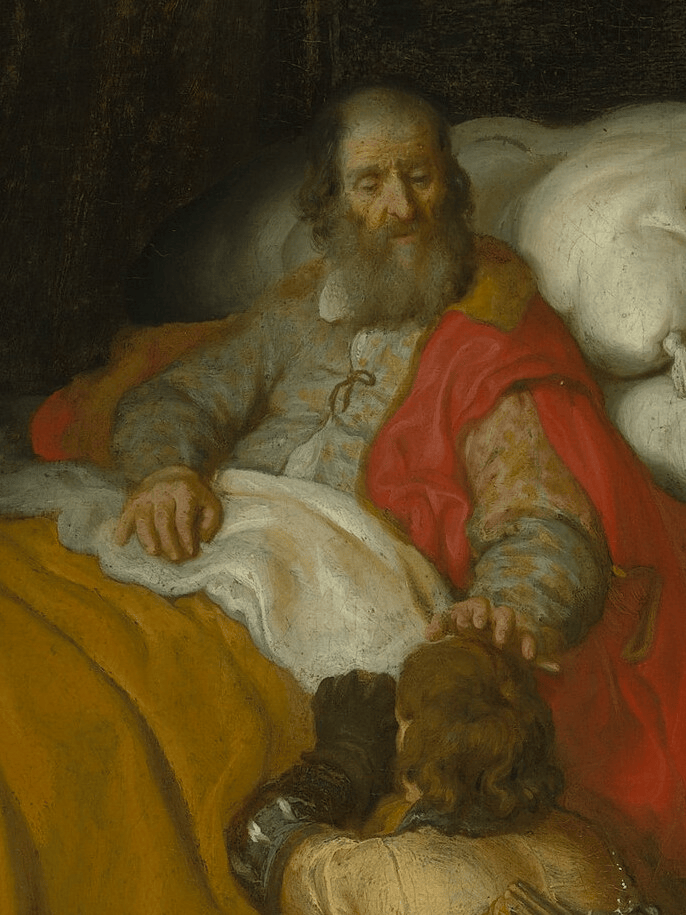
Both Isaac and Ishmael are prophets of God, and both belong to the chosen house of Abraham. Nothing in this discussion should be taken as a denigration of either of them. In this thread, we will try to disprove the argument that Ishmael was the sacrificial son in place of Isaac.
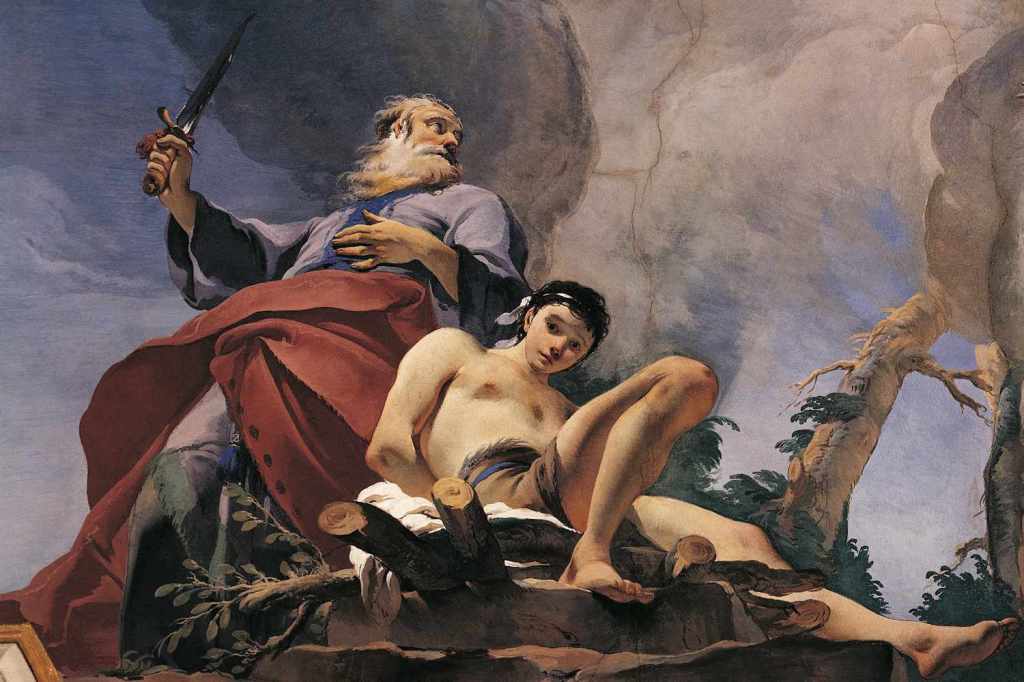
Telos of the Argument
To many this entire argument may seem a foray into what is considered “idle talk,” yet, on the contrary I consider this matter rather important. Islam, as a tradition with genealogical ties to Judaism—just like Christianity—requires a coherent covenantal theology, one that is adequate to the sacred history presented by the Qurʾan itself. We know very well that Israel was not one nation among many, but the people God elevated above all others and entrusted with his salvific message (Q. XLV:16, among others—see below). We should therefore be able to explain why exactly God chose Isaac as the forebear of that covenant. We should also come to understand the place of Islam within the history of the Abrahamic religions more broadly. The emergence of the Seal of the Prophets, our Lord Muhammadﷺ from the line of Ishmael does not require us to rewrite this history such that Ishmael is made the son of the covenant. Rather, one should be able to account for both Isaac’s original precedence within it and how Ishmael’s line eventually inherited it.
Does the evidence, both scriptural and rational, permit a Muslim to regard Isaac as taking precedence over Ishmael?
I believe that it does. The argument given will be cumulative, since there are no explicit scriptural statements on the matter. In brief, Isaac’s divine election, his appointment among the “guiding imams,” his identification among the Sahaba (Companions) as Abraham’s sacrificial son, and the line of prophecy and scripture which proceeds through him provide a serious case for his precedence over Ishmael, to say nothing of his being the son of the Covenant, through whom God’s legal and territorial promises to Abraham were uniquely granted and perpetuated.
May Prophets be Ranked?
God affirms differences in the ranks of the prophets in the Qur’an:
“Those messengers—We preferred some of them over others. Among them were those to whom God spoke, and He raised some of them in degrees.”
[Q. II:253; see also Q. XVII:55.]
When Muslims say that we “make no distinction” among the prophets (Q. II:136), this means that we accept them all in faith rather than believing in some and rejecting others. It does not mean that every prophet possesses the same station. Ibn Kathir accordingly explains that it is only the comparisons through partisan disparagement and quarreling that has been prohibited.
My comparison shall therefore be based upon revealed distinctions and conducted without diminishing the prophet Ishmael.
Before arguing in favor of Isaac, I would like to briefly argue the case for Ishmael.
First Ishmael is explicitly called “a messenger (rasul) and prophet (nabi),” (whereas Isaac is only explicitly referred to as a prophet (nabi)), one “true to his promise,” and “pleasing to his Lord (Q. XIX:54—55). Second, he assisted his father Abraham in raising the foundations of the Kaaba and prayed with him for a believing nation and a messenger among their descendants (Q. II:125—129) Finally, Ishmael is the progenitor of the family line which culminates in Muhammad ﷺ, the greatest of creation.
Why These Proofs Do Not Settle the Matter
The Qur’anic description of Ishmael as “messenger and prophet” while explicitly given about him, does not necessarily exclude Isaac from the same office. In fact, there is a separate passage in al-Nisa’ which reads,
“Indeed We revealed to you [O Muhammad] as We revealed to Noah and the prophets after him; and We revealed to Abraham, Ishmael, Isaac, Jacob… and We have sent to you just as We sent many great messengers… lest mankind have any case to make against Allah…”
[Q. IV:163—165]
Various Qur’anic exegetes including but not limited to al-Tabari, al-Qurtubi, al-Razi and al-Baydawi have understood this passage as including Isaac among the messengers.
[Al-Tabari (d. 923), Jami al-Bayan, commentary on Q. 4:164–165; al-Qurtubi (d. 1273), al-Jami li-Ahkam al-Qur’an, commentary on Q. 4:165; Fakhr al-Din al-Razi (d. 1210), Mafatih al-Ghayb, commentary on Q. 4:165; al-Baydawi (d. 1286), Anwar al-Tanzil wa-Asrar al-Ta’wil, commentary on Q. 4:164–165.]
Further, service at the Kaaba proves that Ishmael had a unique sacred vocation alongside his father, but it does not establish total superiority over Isaac, who was entrusted with a separate, unique vocation. Not only was Isaac the son of the Covenant, through whom the prophets of the Jewish law were established, but he was also (I argue) Abraham’s sacrificial son, whom God saved at the last moment, replacing him with a ram. I will argue for this view later in the thread.
Nor does Muhammad’s descent settle the matter. The excellence of a descendant is not a boon to every ancestor. It may be argued that among Muhammad’s progenitors after Ishmael were many sinful if not unbelieving men (scholars differ on the latter). Muhammad ﷺ is supreme because of his individual divinely granted station, and not because of his genealogy.
Isaac as the Miraculously Designated Heir
Isaac’s birth is announced unto Abraham and Sarah as a miracle (due to Sarah’s age), and the names of his ancestors follow him.
“We gave [Sarah] good tidings of Isaac, and after Isaac, Jacob.”
[Q. XI:71; see also Q. XV:51–56 and LI:28–30.]
Isaac Among the Guiding Imams and the Chosen
God says of Abraham’s house:
“We granted him Isaac then further Jacob as well — and every single one of them We made supremely righteous. And we made them signal exemplars who guided by Our command; and We inspired them with the highest spiritual works… And Us alone they humbly ever worshiped.”
[Q. XXI:72—73]
Isaac here is included among the a’imma, leaders who guide by the divine command. The Qur’an elsewhere joins Isaac to Abraham and Jacob as men of spiritual power and perception.
“And remember for patience our servants Abraham, Isaac and Jacob: All of mighty hands for good works, and exalted spiritual insight. Verily We chose them for a special gift to them alone… and verily they were with Us of the chosen, the great in good.”
[Q. XXXVIII:45—47]
The cumulative result of these praises for Isaac in the Qur’an (which are absent for Ishmael) serve as a scriptural basis for preferring him over his brother.
Isaac’s Scriptural Inheritance
After mentioning Abraham’s migration from Ur to Canaan, the Qur’an says:
“And we bestowed on him Isaac, and in turn Jacob; And made in his seed prophethood and Scripture…”
[Q. XXXI:27]
“His descendants” may also include Ishmael and Muhammad since the subject is Abraham. Nevertheless, the sequence names Jacob after Isaac, and we know very well that this promise of prophethood has proceeded from Isaac through Jacob to dozens of Prophets. Among those named in the Qur’an are: Jacob, Joseph, Moses, Aaron, David, Solomon, Elijah, Elisha, Jonah, Zechariah, John and Jesus.
The Qur’an likewise speaks of God’s favour being completed upon the house of Jacob “as He completed it upon your fathers Abraham and Isaac.” (Q. XII:6). Muhammad ﷺ calls Joseph:
The noble, son of the noble, son of the noble, son of the noble: Joseph, son of Jacob, son of Isaac, son of Abraham.”
[Sahih al-Bukhari, 3390.]
We see that the Qur’an repeatedly presents Isaac’s prophetic lineage as the locus for the succession of a unique divine boon, which leads us onto our next point.
The Election of the Children of Israel
God speaks of the Children of Israel in the Qur’an explicitly as a divinely chosen or preferred community.
“O Children of Israel, remember full well My blessings I lavished upon you, and that I preferred you over all peoples on the earth.”
[Q. II:47, 122]
And again,
“And truly we chose them [the Children of Israel] in [Our] complete knowledge, over all peoples on the earth.”
[Q. XLIV:32]
Most importantly, God elucidates the matter of this election:
“And verily did We bestow the Children of Israel the scripture and judgement and prophethood; And provided them of all fair viands; and preferred them over all peoples on earth.”
[Q. XLV:16]
“And recall when Moses told his people: ‘My people, remember the blessings of God upon you; when He made among you many prophets, and made you as free and well-off as kings, and bestowed on you what He had never bestowed another people.'”
[Q. V:20]
From this it is not to be inferred that the Jews were automatically saved as al-Razi and al-Qurtubi note. Indeed, we know that they broke their covenant with God on many occasions, and severed it entirely with their rejection of the Christ.
Yet the point relevant to Isaac is precise. We say that God chose his branch through Jacob to bear this flow of prophecy and scripture, such that the Jews became a conduit for God’s revelation over thousands of years. The primacy of Isaac’s own covenantal office allowed for this.
One might understand this covenant through the laws of ancient Mesopotamian inheritance law. Under Hammurabi’s Code any son born to his wife’s personal maidservant was considered a legitimate heir, however, were that wife to conceive a son herself thereafter, the son born to her would take precedence in inheritance. This is exactly what happened with Ishmael and Isaac. Although Ishmael was born first, he was born to Hagar, Sarah’s maidservant, and Isaac was born to Sarah directly, making him more legitimate. Yet, if a king abdicates or is deposed, the succession will often go to the next in line. This is what happened in the case of the covenant. When the Jews broke their covenant, the covenant of Isaac continued through Christ’s Church until they themselves broke the covenant by turning their prophet into the object of worship. At this point, it was required of God to put Abraham’s covenant in the charge of his heir presumptive, Ishmael. And so Islam rose through our Lord Muhammad ﷺ, when the Arians had all but gone extinct due to mounting imperial pressure, and with the conversion of the remaining barbarian kings to Chalcedonianism.
Why I believe Isaac Was the Sacrificial Son
While the Qur’an leaves the sacrificial son unnamed in Q. XXXVII:100–107, I believe that the intra and extra-Qur’anic evidence points very strongly to it being Isaac, rather than Ishmael.
First, when Abraham announces his migration—”I am going to my Lord; He will guide me”—and then prays for righteous progeny, he receives tidings from God of “a forbearing boy” (Q. XXXVII:99–101), that one whom he dreams shall be sacrificed. Most interestingly, we see the same pattern elsewhere in the Qur’an, except in the forgoing cases we see the Isaachian lineage mentioned explicitly. In Q. XIX:49, XXI:71–72, XXIX:26–27 we see that with the inception of Abraham’s migration, he is immediately informed of the gift of a prophetic family beginning through Isaac and then Jacob specifically. Likewise, every other scriptural account names that son whose birth was announced as Isaac. (Q. XI:69–73, XV:51–55, LI:24–30). The Qur’an certainly honours Ishmael, but nowhere does it give him an explicit annunciation as it does for Isaac. Thus, it should be presumed that the “forbearing son” to be sacrificed in Q. XXXVII:102–107 is Isaac.
It is for precisely this reason that the eminent exegete al-Tabari judges Isaac to be “the more correct of the two opinions according to the apparent sense of Revelation.”
[Al-Tabari (d. 923), Jamiʿ al-Bayan, commentary on Q. 37:107.]
Second, Q. XXXVII:112 (which mentions Isaac verbatim) need not indicate that this was a new, separate son. One might see why this could cause confusion. After the Binding of Isaac is described, God says:
“And We gave [Abraham] glad tidings of Isaac, a prophet and of the most righteous…”
[Q. XXXVII: 12]
Advocates for the belief that Ishmael was sacrificed read this as the announcement of the birth of a second son, insinuating that this hypothetical “Binding of Ishmael” (who has yet gone unnamed) occurred before Isaac was even born. Al-Tabari, however, reads this verse as a renewed announcement of Isaac’s prophethood after he had offered himself on the pyre in obedience. He transmits this exact interpretation from Tarjuman al-Qur’an ibn Abbas, ‘Ikrima, Qatada, and al-Suddi. On this reading the sequence occurs chronologically as follows: Isaac is announced as a forbearing (ie. patient) boy, proves that forbearance by submitting to sacrifice, is ransomed and is then honored with the good news that he will be a righteous prophet. Al-Razi also permits this interpretation, though he himself does not pick a side in this debate.
Third, the Isaac position is furnished by most early Muslim authorities. Al-Tabari adopts it outright. Al Qurtubi calls it the position of the majority, and associates it with reports from seven companions including Umar, Ali, ibn Mas’ud, al-‘Abbas, ibn ‘Abbas, ibn ‘Umar and Jabir. He also lists a large body of Tabi’in (successors to the Companions) and later scholars who held to it. He concludes that it had stronger transmission from the Prophet ﷺ, with some even considering the narration from al-‘Abbas to be Marfu’ (ie. the words of the Prophet on the tongue of a companion). While these individual reports may vary in authenticity (ranging from undeniable in the case of ibn ‘Abbas to ibn Mas’ud and weak in the case of ‘Ali), they collectively prove that identifying the sacrificial son with Isaac was a real and indeed overwhelmingly prevalent view among the earliest Muslims.
Some further objections that deserve answering:
Ishmael’s description as being among the “dauntlessly patient” alongside Idris (Hermes Trismegistus or Enoch) (Q. XXI:85) and as “true to his word” do establish a few among many of his virtues, but neither of those implies that he was the sacrificial son. This would be grasping at straws at best.
Nor does the connection between the sacrifice and Mecca settle the question. The Qur’an never mentions the location of the sacrifice, and reports that the horns of the ram being kept at the Kaaba prove, at the very most, that a relic used to be preserved there. Al-Tabari suggests that they may have been carried from The Levant to Mecca.
Finally, the statement sometimes given, where the Prophet ﷺ is supposed to have said “I am the son of the two sacrificial ones” cannot bear the weight our interlocutors have placed upon it. Wali al-Din al-Iraqi said that he could find no source for it, and al-Alusi mentions its numerous unknown transmitters. This cannot be used as evidence.
[Al-Tabari (d. 923), Jami al-Bayan, commentary on Q. 37:102, 107, 112; al-Qurtubi (d. 1273), al-Jami li-Ahkam al-Qur’an, commentary on Q. 37:102; Fakhr al-Din al-Razi (d. 1210), Mafatih al-Ghayb, commentary on Q. 37:102; al-Alusi (d. 1854), Ruh al-Ma’ani, commentary on Q. 37:112–113.]
I am therefore overwhelmingly persuaded that Isaac was the sacrificial son. It is the most coherent reading of the Qur’an and is supported substantially by the early Islamic tradition.
The Biblical Evidence
If it were not clear already, I will present the words of the Bible which are immensely clear on the matter. Now, the Bible cannot independently establish an article of our faith as Muslims, however the Prophet ﷺ permitted the narration from the Children of Israel (Sahih al-Bukhari 3461), adding that there is no harm in that. I find it therefore totally within order to use the Bible for corroborative evidence.
Genesis clearly distinguishes between Ishmael’s blessing and Isaac’s covenantal office:
18 And Abraham said unto God, O that Ishmael might live before thee!
19 And God said, Sarah thy wife shall bear thee a son indeed; and thou shalt call his name Isaac: and I will establish my covenant with him for an everlasting covenant, and with his seed after him.
20 And as for Ishmael, I have heard thee: Behold, I have blessed him, and will make him fruitful, and will multiply him exceedingly; twelve princes shall he beget, and I will make him a great nation.
21 But my covenant will I establish with Isaac, which Sarah shall bear unto thee at this set time in the next year.
[Genesis 17:18–21, KJV.]
Genesis 21:12 re-iterates that Abraham’s promised line will proceed through Isaac. Genesis 22 then names Isaac repeatedly as the son offered by Abraham, and St. Paul in Hebrews 11:17–19 (a meditation on how the Binding of Isaac demonstrates God’s power to raise the dead) restates the same. The canonical texts of the Bible are thus unambiguous on the matter.
Further, Israel is called God’s “peculiar treasure,” “a kingdom of priests,” and “an holy nation” (Exodus 19:5–6); a people chosen from all the peoples of the earth (Deuteronomy 7:6; 14:2); and God’s chosen possession (Psalm 135:4).
The Rational Form of the Argument
Simply stated, the argument as posited goes as follows:
- The Prophets are distinguished and ranks may be drawn between them. Precedence can be inferred (albeit cautiously in some instances) from the comprehensiveness of the honours bestowed on them. For instance, we know that Muhammad ﷺ is greater than Jesus.
- Isaac is miraculously designated by name, included among the guiding imams, called one of the chosen, most probably identified as the sacrificial son, and became progenitor to the prophetic line of God’s chosen Israel.
- The convergence of all these virtues provides a case for his precedence over Ishmael.
In conclusion, without denying the greatness and unique vocation of Ishmael, the evidence overwhelmingly supports the superiority of his brother, Child of the Promise, the Holy Patriarch, Isaac, son of Abraham.