On Imam Bukhari
Imam al Bukhari, who was known as Abū ʿAbd Allāh, Muḥammad ibn Ismāʿīl ibn Ibrāhīm ibn alMughīrah al-Bukhārī was a great scholar of Islam who was born in Bukhara. In 210 AH, he undertook a long journey in search of ḥadīth. He travelled to Khurāsān, Iraq, Egypt, and Shām. He studied ḥadīth from approximately 1000 teachers. He compiled around 600 000 aḥādīth. From these he selected, in his book, al-Ṣaḥīḥ, those aḥādīth in which he had total confidence. He is the first man to compile a book in such a manner, and Sahih al-Bukhari is the first hadith collection of the Six Books of Islam (kuttab as sittah).
Qutaybah ibn Saʿīd says regarding al-Bukhārī, “I sat with many jurists, ascetics, and worshipers. Since I came of age, I have not seen anyone like Muḥammad ibn Ismāʿīl. In his era, he was like ʿUmar (may God be pleased with him) amongst the Companions. Had he been amongst the Companions, he would have been a marvel.”
Abd Allāh ibn Muḥammad ibn Saʿīd ibn Jaʿfar states, “I heard the scholars of Egypt saying, ‘There is no one in the world like Muḥammad ibn Ismāʿīl in knowledge and righteousness.’ I am merely repeating what they had said.”
Mūsā ibn Hārūn al-Ḥammāl al-Ḥāfiẓ al-Baghdādī says, “If the whole world tries to bring another Muḥammad ibn Ismāʿīl, they would be powerless to do so.”
Abū ʿĪsā al-Tirmidhī states, “I did not see anyone more knowledgeable about the irregularities (of ḥadīth) and chains (of narrators) than Muḥammad ibn Ismāʿīl.”
See: Allāmah Muḥammad Fu’ād ʿAbd al-Bāqī’s (1299–1386 AH/1882–1967 CE) comments on what the German Orientalist Brockelmann wrote about in Imam Bukhari’s biography in the Islamic Encyclopedia. Islamic Encyclopedia, 1/1612–1616, Arabic translation, Markaz al-Shāriqah li al-Ibdāʿ al-Fikrī, Cairo, 1418 AH, 1998 CE).
Imam al Bukhari was a model of honesty, bravery, generousity, and piety. It is believed that he used to say, “I have hope in Allah that he would not take me to task for backbiting anyone.” The proof for this is his mannerism when criticising or weakening any narrator. The most he would say is, “fīhi naẓar” (there is scepticism about him)” or “sakatū ʿanhu” (they remained silent about him)” concerning those narrators that had to be abandoned or left out. He would never say that so and so is a liar. An example of this is when Imam al Bukhari concealed the identity of a man who commited a sin that Umar (may God be pleased with him) harshly belittled.
al-Humaydi narrated to us, saying: it was narrated to us by Sufyan, who said: it was narrated to us by ‘Amr b. Dinar, who said: it was reported to me by Tawus that he heard Ibn Abbas saying: It reached ‘Umar b. Khattab that Samura b. Jundub sold wine, so he said, “May Allah destroy Samura, does he not know that the Messenger of Allah (ﷺ) said, ‘The curse of Allah be upon the Jews, for fat [of animals] was forbidden for them so they rendered it (meaning: they melted it) and sold it.'”
Humaydi. 1996. Musnad al-Humaydi (Vol. 1, p. 154). Damascus: Dar al-Suqa.

حَدَّثَنَا الْحُمَيْدِيُّ، حَدَّثَنَا سُفْيَانُ، حَدَّثَنَا عَمْرُو بْنُ دِينَارٍ، قَالَ أَخْبَرَنِي طَاوُسٌ، أَنَّهُ سَمِعَ ابْنَ عَبَّاسٍ ـ رضى الله عنهما ـ يَقُولُ بَلَغَ عُمَرَ أَنَّ فُلاَنًا بَاعَ خَمْرًا فَقَالَ قَاتَلَ اللَّهُ فُلاَنًا، أَلَمْ يَعْلَمْ أَنَّ رَسُولَ اللَّهِ صلى الله عليه وسلم قَالَ “ قَاتَلَ اللَّهُ الْيَهُودَ، حُرِّمَتْ عَلَيْهِمُ الشُّحُومُ فَجَمَلُوهَا فَبَاعُوهَا ”.Narrated Ibn `Abbas: Once `Umar was informed that a certain man sold alcohol. `Umar said, “May Allah destroy him! Doesn’t he know that Allah’s Messenger (ﷺ) said, ‘May Allah curse the Jews, for Allah had forbidden them to eat the fat of animals but they melted it and sold it.”
Sahih al-Bukhari 2223
His motives are also obvious, to conceal Samura’s identity so that he would not reveal such a mans sins to the public, as Imam al Bukhari wished that he would not be tasked to backbite anyone. As for his book, it is clearly the most momentous in Islam and the most virtuous after the Book of God.
On Imam Muslim
He was born in Naysābūr. He travelled to Ḥijāz, Egypt, Shām, and ʿIrāq. He passed away just outside Naysābūr. His full name is Abū al-Ḥusayn Muslim ibn al-Ḥajjāj al-Qushayrī al-Naysābūrī. His most famous work is Sahih Muslim, in which he compiled 12,000 hadith in it and wrote it in about 15 years. The scholars are unanimous upon his loftiness, leadership, high status, skill in presentation, and precedence and proficiency in it.
The following people studied hadith from Muslim:
In Khurāsān: Yahyā ibn Yahyā, Ishāq ibn Rāhawayh, and others. In Ray: Muhammad ibn Mihrān, Abū Ghassān, and others. In ‘Irāq: Ibn Hambal, ‘Abd Allāh ibn Maslamah, and others. In Hijaz: Sa‘īd ibn Manṣūr, Abū Muṣ‘ab, and others. In Egypt: ‘Amr ibn Sawād, Harmalah ibn Yahyā, and others.
Imām al-Nawawī (631–676 AH/1233–1277 CE), while discussing Muslim and his book,
states:
“One of the greatest proofs of his loftiness, leadership, piety, intelligence, status in the field of ḥadīth, its presentation and mastery, is his book alṢaḥīḥ. A book which has not been matched before or after, with regards to the, beautiful sequence, summarisation of the different chains of ḥadīth without any increase of decrease, abstaining from al-Taḥwīl (providing different chains that join to a particular narrator) in the chains when they are agreed upon, without any additions, notification on the words of the narrators if there is any difference in the text or the chain—be it a single word, his prudence in notifying of those narrations which clarify the hearing of the Mudallis (a narrator who leaves out his teacher), and other things which are famous about his book.
A person who has an in-depth look into Ṣaḥīḥ Muslim and gets acquainted with the presentation of the chains, his layout, his beautiful sequence, his unique manner of priceless investigations, gems of precision, type of caution and care in the narrations, summarisation and conciseness of the chains, the capture of the different and wide spread chains, his excessive knowledge, vastness of the narrations, and other beauties and wonders, as well as hidden and apparent intricacies, will realize that he is such an Imām (leader in the field) that those who come after him cannot reach his status. Very few in his era can come close to him, let alone being equal to him”
Al-Nawawī: Al-Taʿrīf bi al-Imām Muslim, quoting from Imām al-Nawawī: Tahdhīb alAsmā’ wa al-Lughāt, in the introduction of Sharḥ al-Nawawī li Ṣaḥīḥ Muslim, Maḥmūd Tawfīq Publishers, Cairo.
This article will be divided into n parts, n different claims that Shi’ites make about Imam Bukhari/Imam Muslim, which will be individually refuted in their respective section.
- The Ummayad Influence on Sahih Bukhari and Sahih Muslim
- The “lack” of reports narrated from Ali ibn Abi Talib, Hussein ibn Ali, Hasan ibn Ali, and Fatimah bint Muhammad
- Conclusion: Why are Sunni hadith superior?
The Ummayad Influence on Sahih Bukhari and Sahih Muslim
The Shi’ite writer Ahmad Rāsim al-Nafīs writes in his Bayt al-ʿAnkabūt the following excerpt:
Whatever is presented in these books i.e. al-Bukhārī, Muslim, and other books of Ḥadīth by the Ahl al-Sunnah wa al-Jamāʿah represents the Umayyad narrations for religion. Al-Bukhārī supported the Banū Umayyah. Therefore, he did not narrate anything about the Battle of Karbalā’ (61 AH, 180 CE) nor did he narrate a single word from Ḥasan and Ḥusayn. We have established through decisive proofs that most of the material in these books have been brought to represent the views of the Umayyad; and Ṣaḥīḥ al-Bukhārī and Muslim have been compiled to promote the Umayyad state. Their object is to destroy the leaders of the Ahl al-Bayt.
Ahmad Rāsim al-Nafīs: Bayt al-ʿAnkabūt, pg. 186, 187, 212, 213, 214, Cairo print, 2010
The First Issue: The Abbasid Caliphate was a time of hostility towards the Ummayads. The Umayyad state is remembered as an Arab-centric state, being run by and for the benefit of those who were ethnically Arab though Muslim in creed. The non-Arab Muslims resented their marginal social position and were easily drawn into Abbasid opposition to Umayyad rule. In fact, during the Abbasid revolution, the Abbasids spent more than a year preparing their propaganda drive against the Umayyads. There were a total of seventy propagandists throughout the province of Khorasan, operating under twelve central officials. 1 Why is this important you might ask?
- Imam Bukhari was born in 194 AH, a total of 60 years after the fall of the Ummayad caliphate (during the Abbasid Caliphate)
- Imam Muslim was born in 206 AH, approximately 70 years after the fall of the Ummayad caliphate (during the Abbasid Caliphate)
- This was the era where most of the Ummayads and their families were massacred, most of the Islamic world under the Abbasids hated the Ummayads.
Therefore, how can the books they authentically compiled be part of the Umayyad State, whose aim is to allegedly destroy the leaders of the Ahlul-Bayt? How can this be the message of these books whereas there is not a single ḥadīth which criticises the leaders of the Ahlul-Bayt? Imam Bukhari and Imam Muslim were born, bred, and passed away during the Abbasid era, to level accusations against them of being loyal to the Umayyad and operating according to their desires is merely conjecture.
The Second Issue: In the praise of the great Imam al Bukhari, it is authentically reported how he ran away from the state, leadership, and its leaders during the Abbasid era. He refused to accept the request of the leader of Bukhārā to go to the palace and narrate ḥadīth in his court.
Tell him that I will not disgrace knowledge, nor will I take to the doors of the kings. If he has any need for it then he should present himself by my masjid or my house. If you do not like this then you are the leader. Stop me from having these gatherings, so that on the Day of judgement I have an excuse by Allah that I did not hide knowledge.
Dā’irah al-Maʿārif al-Islāmiyyah, 6/1622.
As a result of this, Khālid ibn al-Dhuhalī expelled Imam Bukhari from Bukhara. Now, it is clear that Imam Bukhari, even though living in the era of the Abbasids, was not loyal to them. Then how can he be loyal to the Umayyads, whose empire had ended more than half a century before he was born?
The Third Issue: Ahmad al Nafis did not expound on al-Bukhārī and Muslim’s narrations from ʿAbd Allāh ibn al-Zubayr. He is one of the greatest opponents to the Umayyads. He revolted against them and set up his own state and Khilāfah against them. Despite this, al-Bukhārī and Muslim narrated from him.
The “lack” of reports narrated from Ali ibn Abi Talib, Hussein ibn Ali, Hasan ibn Ali, and Fatimah bint Muhammad
Note: Ahlul-Bayt are Wives and children of the Prophet and Aal(progeny) Ali Ibn Abi Talib, Aal Aqil, Aal Jafar, Aal of Al-Abbas as being authentically reported by Zaid Bin Arqam in the Sahih of Imam Muslim. Yet, we will concentrate on the Ahulu-Kisaa… ’ i.e. Muhammad, Ali, Fatimah, Al Hassan and Al Hussein , because these are the members who are considered as PURIFIED Ahlul-bayt without any dispute in the sight of Ahlus-sunnah as well as Shias.
Narrations from Ali ibn Abi Talib from Sunni Literature vs. Shi’ite Literature.
Most of the time what one will see is that Shias will claim that the books of Ahlus-Sunnah do not narrate from the Ahlul-Kisaa let alone Ali ibn Abi Talib. A more knowledgable Shi’ite would rather argue that Ahlus-Sunnah narrates very few narrations from Ali ibn Abi Talib. So let’s check who narrated more authentic narrations of the great Imam of the Ahlul-Bayt.
To begin, let us compare the two Sahihs with Kitab al Kafi, the most authoritative book in the Shi’ite hadith corpus. This is more than fair for Al Kafi alone contains more than 16,000 narrations, which is more narrations than the two Sahihs combined. After further scrutiny, we see that only about 66 narrations in Al Kafi can be attributed to Ali ibn Abi Talib. We have used the authentication of al-Majlisi in “Mir’at al-`Uqoul” since his gradings are the most popular, the most accepted and the most balanced.
To no surprise whatsoever, in the two Sahihs, Ali ibn Abi Talib narrates 98 narrations. This is more than Abu Bakr and Uthman combined! It is important to note that in the 8 Books of Ahlus-Sunnah [Sahih Bukhari, Sahih Muslim, Sunan al Tirmidhi, Sunan al Nasaai, Sunan Abi Dawood, ibn Maajah, Musnad Ahmad and Musnad al Daarimi] have 1583 narrations narrated by Ali ibn Abi Talib. The one who was allegedly hated by the Ummayad caliphs.
More specifically, Imam Ahmed ibn Hanbal in his Musnad Ahmad collected only 500 narrations from the first three caliphs, i.e. Abu Bakr, Umar and Uthman. Shockingly, He narrated 804 narrations from Ali alone! He also narrated 18 narrations from Al Hassan Ibn Ali whereas the Shia Imamites narrated only 21 narrations from him in all four of their major books of hadith!
Ibn Kathir, a student of Ibn Taymiyyah (who many accuse of being a despiser of the Ahlul Bayt) said:
The healthiest (strongest) chain is: Ja’far (Al Sadiq) from, Muhammad (Al-Baqir), from Ali (Al-Sajjaad), from Al-Hussein, from ALI IBN ABI TALIB. THIS IS THE GOLDEN CHAIN.
“Al Baith Alhathith Gair Ma’moor” (الباعث الحثيث غير مأمور)
Its a pity that seeing all these examples from Ahlus-sunnah which explicitly proves their love and respect for Ali ibn Abi Talib and his family, the Shi’ite still shamelessly accuse Ahlus-sunnah of being Nasibis (those who oppose the Ahlul-Bayt).
No narrations surrounding any of the Ahlul-Kisaa?
Ahmad Rasim al Nafis writes:
The books of ḥadīth by the Ahl al-Sunnah wa al-Jamāʿah, do not narrate anything of the incident of Karbalā’.
And continues with:
Why is it that the books of ḥadīth by the Ahl al-Sunnah wa alJamāʿah, which al Bukhārī and Muslim narrate, do not narrate from Ḥasan (3–50 AH/624–670 CE) and Ḥusayn?
Ahmad Rāsim al-Nafīs: Bayt al-ʿAnkabūt, pg. 187 Cairo print, 2010
The First Issue: The author of Bayt al-Ankabut is forgetting (or more likely, pretending to forget) that the incident of Karbala is a historical event and not a part of the Sunnah of the Prophet Muhammad (upon whom be peace). These books are not history books, the tragedy of Karbala happened much much after the death of the Prophet, it is not appropriate to include it in the book. Sunnah is the traditions and practices of the Islamic prophet Muhammad (SAW) that constitute a model for Muslims to follow. The sunnah is what all the Muslims of Muhammad’s (SAW) time evidently saw and followed and passed on to the next generations. The details of the tragedy of Karbala have been mentioned in the history books of Ahlus-Sunnah and have showed sympathy for the grandson of the Prophet.2
While Sunni sources may provide limited details about the events of Karbala, the information they do offer is considered authentic. In contrast, Shia sources are often criticized for containing reports with less reliable chains of narration, including disconnected accounts and anonymous narrators.
The Second Issue: Yet again he forgets or is pretending to forget that Hasan was 7 years old at the time of the demise of the Prophet and Husayn was 6 years old at that time. Hence, for them to memorise and narrate ḥadīth was difficult. There is no paradox in this. This can also be extended to Fatimah bint Muhammad who died in 11 AH, it is obvious as to why she would not have as many contributions to narrations as opposed to someone like Aisha bint Abu Bakr who died in the year 58 AH. Also, it is important to note that there are exactly zero narrations in Al-Kafi of Fatimah bint Muhammad, in Sahih Bukhari, there is exactly one.3
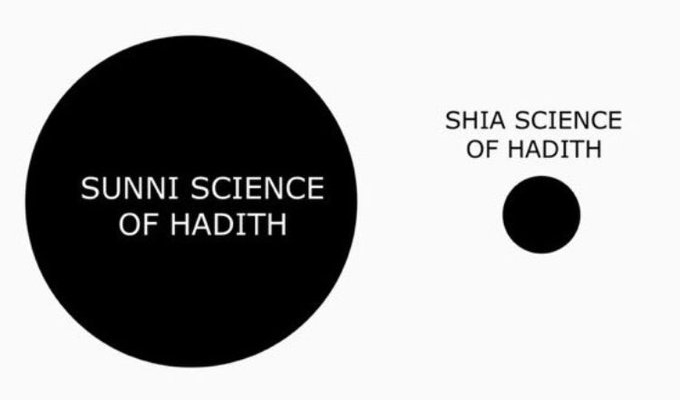
Why are Sunni Hadith Superior?
- The Weakening of narrators: Sunnis have compiled numerous volumes dedicated to the evaluation and weakening of narrators, with some books listing thousands of such narrators. In contrast, Shia scholars often reference “Du’afaa’ Ibn Al-Ghada’ire” as a primary source for assessing weak narrators. However, the reliability of this book is questionable due to uncertainties surrounding its authorship.
- Sunnis have authored books that revolve around good narrators that have become weak with age. Shias, on the other hand, have never done such a thing because they didn’t entertain such a possibility.
- Sunnis have authored books on chain disconnections. They would list out names of narrators and give evidences that these narrators didn’t meet their teachers. Shias, on the other hand, never entertained the possibility that a student probably never met his teacher.
- Sunnis have authored books on tadlees. This revolves around students that have met their teachers, however didn’t narrate a specific hadith from them. Shias, on the other hand, never entertained the possibility that a student may have not heard one of the narrations of his teacher.
- Sunnis have a significant upper hand when it comes to the documentation of dates. Because of this, scholars like Al-Tusi had to rely on work by Sunni scholars when stating the year in which a Shia narrator died.
- The lack of Rijal literature: The most significant book in Shia rijal literature is likely “Rijal Al-Najashi” (d. 460), containing biographies of 1,269 narrators. In contrast, one of the most important works for Sunni rijal is “Al-Jarh wal Ta’deel” by Ibn Abi Hatim (d. 327), which includes information on 18,037 narrators.
- Sunni Sources Predate Shi’ite Sources: When evaluating primary historical sources, historians employ a rule known as the “Time and Place Rule”. This rule entails that historical sources that are closer in time and place to the event(s) they address are generally given precedence over later and more distant sources. The earliest Shi’i author with extant work was Ahmed b. Muhammad al Barqi (d. 274) whereas the earliest Sunni author with extant work was Ma’mar b. Rashed (d. 153).
- Lack of eyewitnesses: Shi’ite scholarship reject the reliability of the Sahabah as transmitters of hadith, thereby relying heavily on the sayings of the Imams for their traditions. Among the Twelve Imams, only three had firsthand experience of certain events from the life of the Prophet (upon whom be peace), yet these three are infrequently quoted in Shi’ite collections compared to the other Imams.
- The Circular reasoning behind the appeal to Shi’ite sources: Shi’ite apologists and polemicists often defend their primary sources by claiming adherence to a supposed prophetic command to follow Ahlul-bayt. However, this argument is circular, as the “command to exclusively follow Ahlul-bayt” is derived from the very Shi’ite primary sources in question. The vague and often weak reports on the virtues of Ahlul-bayt in Sunni sources do not validate the Shi’ite primary texts, as Sunni sources also include numerous reports from Ahlul-Bayt.The assertion that Shi’ite collections are the sole historical sources transmitting from Ahlul-Bayt is entirely false. Even in authentic narrations, the virtues are not proof that one must their religion from such people and that such people are infallible. Not to mention these narrations definitely do not mention the latter imams (whom Shi’ites take narrations from!).
- A disregard of Hadith gradings: Some of the Akhbaris Shi’ites believe that if the science of jarh and ta’deel were applied to the Shiite narrations, all of them would fall.
- See Also: Asif Mohsini and the Rijal Time-Gap Dilemma
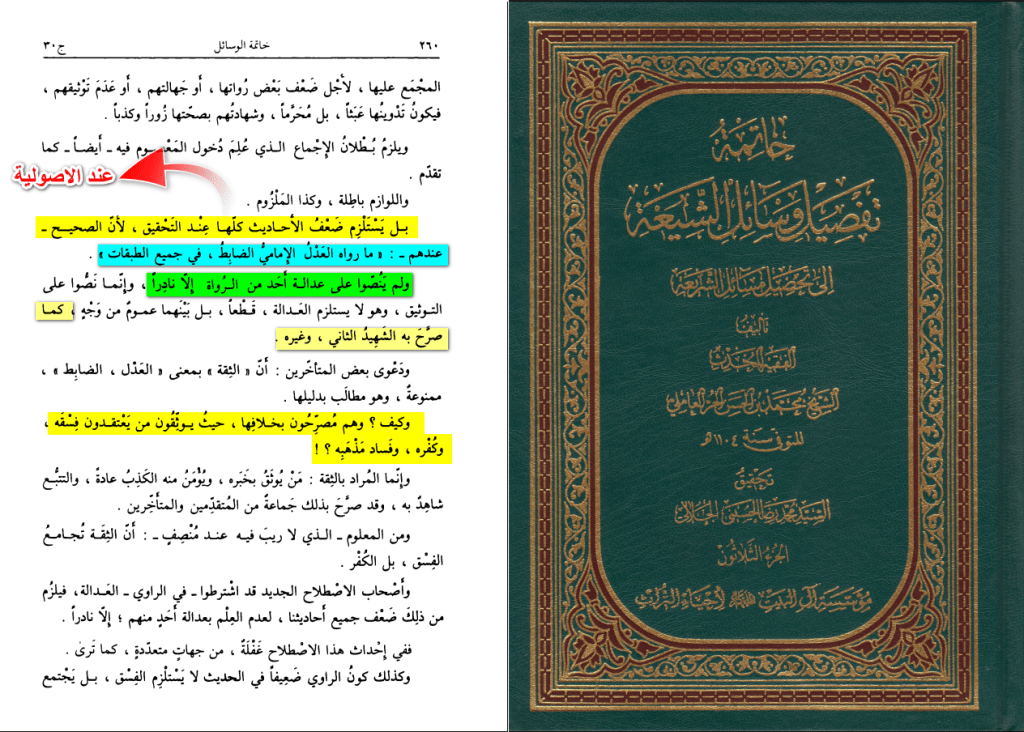
This list is not exhaustive, and I plan on writing considerably more articles on this matter.I shall conclude this article by reminding you, of what the great Ibn Sirin, once said:
“Indeed, this knowledge is religion, so be careful from whom you take your religion.”
 Mehdi's Library
check the two books on Mahajjah on criticism of narrators and hadith science
LikeLike