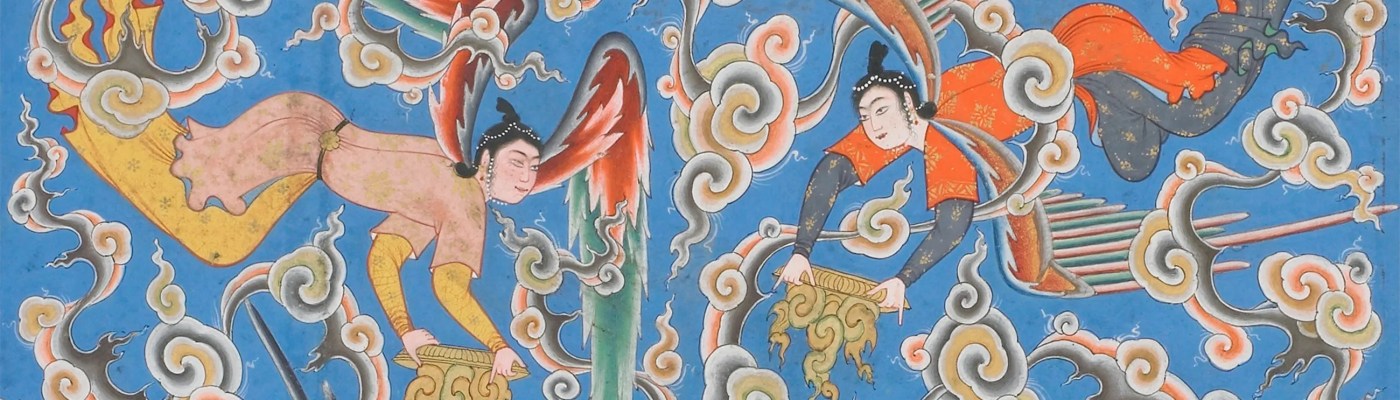
Shaykh al-Islām Fakhr al-Dīn al-Rāzī clarifies the misunderstandings of certain individuals regarding this verse, which may result in anthropomorphic interpretations. He draws attention to the fact that such descriptions must be understood in a manner so as not to infringe upon the transcendence of Allāh Subḥānahu wa Taʻāla. Where literal interpretation may contradict the majesty of the divine nature, Imām al-Rāzī insists upon Ta’wīl (interpretative theology).
وَٱلْمَلَكُ عَلَىٰٓ أَرْجَآئِهَا ۚ وَيَحْمِلُ عَرْشَ رَبِّكَ فَوْقَهُمْ يَوْمَئِذٍ ثَمَـٰنِيَةٌ (١٧)
“And the angels will be on the sides thereof, and eight will uphold the Throne of thy Lord that day, above them.” (17)
Tafsīr of Imām al-Rāzī (may Allāh be pleased with him):
…The Fourth Issue: The corporealists have claimed: “If Allāh were not on the ‘Arsh, then [the angels] carrying it would [serve no purpose]. This is emphasized [by the following verse (Q|69:18)]: ‘On that day ye will be exposed…’ since we know that the exposition [of the sinners] can only occur if the Lord is upon the Throne.”
The monotheists have responded [to this] by arguing that this [inferred] meaning is an impossibility because anyone who is carrying the ‘Arsh would also [by necessity] be carrying whatever is upon [it]. If Allāh were upon the ‘Arsh it would require that the angels are carrying Allāh, which is absurd as it implies Allāh’s need for [the angels], and that they hold power [over Him]. All of this is utter blasphemy, and thus [it is necessary] to interpret it [figuratively using Ta’wīl].
We say that [Allāh] described [the scene in this manner as to] address [the people] in terms that they may understand, [just as] he created a house (the Ka’ba) for Himself that they could visit, [yet] within it He does not reside – far [exalted] is He above that. He placed in one corner of [His] house [the Black Stone] as a symbol for His “right hand” on Earth because people honor their leaders by kissing their right hands. He also appointed angels as guardians over mankind, not because [He is unable to guard us] – far [exalted] is he above that, but rather because this is [a perennial tradition, and is easiest for mankind to understand]. Similarly kings, when they want to hold their advisors accountable, sit on a throne surrounded by their attendants, [so shall] Allāh bring forth a throne (the ‘Arsh) on the Day of Judgement [that the angels] shall gather around. This does not mean that He sits upon it or has need of it, but rather [refers to it symbolically], similar to what we have mentioned regarding al Ka’ba and the circumambulation around it.
 Mehdi's Library