For the Twelver Shi’ite sect to be true it must be shown that the concept of 12 infallible imams + the concept of Ghaybah can be unequivocally proven. This is a huge issue for the Twelvers because there is no Sunni hadith, nor any Quran verse, that can prove that these men have been divinely appointed. The hadith of the 12 Caliphs have been addressed here: 12 Caliph Hadith.
It is important to note that Al Mufid writes:
“The Imamiyyah unanimously agree that a person who denies the Imamah of one of the Imams and denies the obedience that Allah subhanahu wa ta ‘ala has ordained for them is a deviant Kafir (disbeliever) who deserves everlasting punishment in the fire of Jahannam.”

This in and of itself refutes the Twelver sect. This is because the concept of Imamate is one of the Five Pillars of Shia Islam. More specifically, accepting the imamate from Ali bin Abi Talib (AS) to ibn Hasan al Askari is a Pillar of Islam for the Twelver sect, if this cannot be unequivocally proven in some way so that everyone must accept this as true, then it would insist that the Quran and Sunnah disregarded a specific part of the religion. This is obviously why some Shi’ites believe in Tahrif (distortion) of the Quran.
Twelvers will then resort to using their own books to prove imamate (even this, is a challenge for them!) and as a result one very specific hadith comes up. That hadith being in Al Kafi Book 4 Chapter 126.
1ـ عِدَّةٌ مِنْ أَصْحَابِنَا عَنْ أَحْمَدَ بْنِ مُحَمَّدٍ الْبَرْقِيِّ عَنْ أَبِي هَاشِمٍ دَاوُدَ بْنِ الْقَاسِمِ الْجَعْفَرِيِّ عَنْ أَبِي جَعْفَرٍ الثَّانِي (عَلَيْهِ السَّلام) قَالَ أَقْبَلَ أَمِيرُ الْمُؤْمِنِينَ (عَلَيْهِ السَّلام) وَمَعَهُ الْحَسَنُ بن علي (عَلَيْهما السَّلام) وَهُوَ مُتَّكِىٌ عَلَى يَدِ سَلْمَانَ فَدَخَلَ الْمَسْجِدَ الْحَرَامَ فَجَلَسَ إِذْ أَقْبَلَ رَجُلٌ حَسَنُ الْهَيْئَةِ وَاللِّبَاسِ فَسَلَّمَ عَلَى أَمِيرِ الْمُؤْمِنِينَ فَرَدَّ عَلَيْهِ السَّلامَ فَجَلَسَ ثُمَّ قَالَ يَا أَمِيرَ الْمُؤْمِنِينَ أَسْأَلُكَ عَنْ ثَلاثِ مَسَائِلَ إِنْ أَخْبَرْتَنِي بِهِنَّ عَلِمْتُ أَنَّ الْقَوْمَ رَكِبُوا مِنْ أَمْرِكَ مَا قُضِيَ عَلَيْهِمْ وَأَنْ لَيْسُوا بِمَأْمُونِينَ فِي دُنْيَاهُمْ وَآخِرَتِهِمْ وَإِنْ تَكُنِ الاخْرَى عَلِمْتُ أَنَّكَ وَهُمْ شَرَعٌ سَوَاءٌ فَقَالَ لَهُ أَمِيرُ الْمُؤْمِنِينَ (عَلَيْهِ السَّلام) سَلْنِي عَمَّا بَدَا لَكَ قَالَ أَخْبِرْنِي عَنِ الرَّجُلِ إِذَا نَامَ أَيْنَ تَذْهَبُ رُوحُهُ وَعَنِ الرَّجُلِ كَيْفَ يَذْكُرُ وَيَنْسَى وَعَنِ الرَّجُلِ كَيْفَ يُشْبِهُ وَلَدُهُ الاعْمَامَ وَالاخْوَالَ فَالْتَفَتَ أَمِيرُ الْمُؤْمِنِينَ (عَلَيْهِ السَّلام) إِلَى الْحَسَنِ فَقَالَ يَا أَبَا مُحَمَّدٍ أَجِبْهُ قَالَ فَأَجَابَهُ الْحَسَنُ (عَلَيْهِ السَّلام) فَقَالَ الرَّجُلُ أَشْهَدُ أَنْ لا إِلَهَ إِلا الله وَلَمْ أَزَلْ أَشْهَدُ بِهَا وَأَشْهَدُ أَنَّ مُحَمَّداً رَسُولُ الله وَلَمْ أَزَلْ أَشْهَدُ بِذَلِكَ وَأَشْهَدُ أَنَّكَ وَصِيُّ رَسُولِ الله (صَلَّى اللهُ عَلَيْهِ وَآلِه) وَالْقَائِمُ بِحُجَّتِهِ وَأَشَارَ إِلَى أَمِيرِ الْمُؤْمِنِينَ وَلَمْ أَزَلْ أَشْهَدُ بِهَا وَأَشْهَدُ أَنَّكَ وَصِيُّهُ وَالْقَائِمُ بِحُجَّتِهِ وَأَشَارَ إِلَى الْحَسَنِ (عَلَيْهِ السَّلام) وَأَشْهَدُ أَنَّ الْحُسَيْنَ بْنَ عَلِيٍّ وَصِيُّ أَخِيهِ وَالْقَائِمُ بِحُجَّتِهِ بَعْدَهُ وَأَشْهَدُ عَلَى عَلِيِّ بْنِ الْحُسَيْنِ أَنَّهُ الْقَائِمُ بِأَمْرِ الْحُسَيْنِ بَعْدَهُ وَأَشْهَدُ عَلَى مُحَمَّدِ بْنِ عَلِيٍّ أَنَّهُ الْقَائِمُ بِأَمْرِ عَلِيِّ بْنِ الْحُسَيْنِ وَأَشْهَدُ عَلَى جَعْفَرِ بْنِ مُحَمَّدٍ بِأَنَّهُ الْقَائِمُ بِأَمْرِ مُحَمَّدٍ وَأَشْهَدُ عَلَى مُوسَى أَنَّهُ الْقَائِمُ بِأَمْرِ جَعْفَرِ بْنِ مُحَمَّدٍ وَأَشْهَدُ عَلَى عَلِيِّ بْنِ مُوسَى أَنَّهُ الْقَائِمُ بِأَمْرِ مُوسَى بْنِ جَعْفَرٍ وَأَشْهَدُ عَلَى مُحَمَّدِ بْنِ عَلِيٍّ أَنَّهُ الْقَائِمُ بِأَمْرِ عَلِيِّ بْنِ مُوسَى وَأَشْهَدُ عَلَى عَلِيِّ بْنِ مُحَمَّدٍ بِأَنَّهُ الْقَائِمُ بِأَمْرِ مُحَمَّدِ بْنِ عَلِيٍّ وَأَشْهَدُ عَلَى الْحَسَنِ بْنِ عَلِيٍّ بِأَنَّهُ الْقَائِمُ بِأَمْرِ عَلِيِّ بْنِ مُحَمَّدٍ وَأَشْهَدُ عَلَى رَجُلٍ مِنْ وُلْدِ الْحَسَنِ لا يُكَنَّى وَلا يُسَمَّى حَتَّى يَظْهَرَ أَمْرُهُ فَيَمْلاهَا عَدْلاً كَمَا مُلِئَتْ جَوْراً وَالسَّلامُ عَلَيْكَ يَا أَمِيرَ الْمُؤْمِنِينَ وَرَحْمَةُ الله وَبَرَكَاتُهُ ثُمَّ قَامَ فَمَضَى فَقَالَ أَمِيرُ الْمُؤْمِنِينَ يَا أَبَا مُحَمَّدٍ اتْبَعْهُ فَانْظُرْ أَيْنَ يَقْصِدُ فَخَرَجَ الْحَسَنُ بن علي (عَلَيْهما السَّلام) فَقَالَ مَا كَانَ إِلا أَنْ وَضَعَ رِجْلَهُ خَارِجاً مِنَ الْمَسْجِدِ فَمَا دَرَيْتُ أَيْنَ أَخَذَ مِنْ أَرْضِ الله فَرَجَعْتُ إِلَى أَمِيرِ الْمُؤْمِنِينَ (عَلَيْهِ السَّلام) فَأَعْلَمْتُهُ فَقَالَ يَا أَبَا مُحَمَّدٍ أَ تَعْرِفُهُ قُلْتُ الله وَرَسُولُهُ وَأَمِيرُ الْمُؤْمِنِينَ أَعْلَمُ قَالَ هُوَ الْخَضِرُ (عَلَيْهِ السَّلام )
- A number of our people has narrated Ahmad ibn Muhammad al-Barqi from abu Hashim Dawud ibn al-Qasim al-Ja‘fari from abu Ja‘far al-Thani who has said the following. “Once Amir al-Mu’minin Ali (a.s.) came with al-Hassan and al-Husayn and he was holding the hand of Salman for support. He entered the sacred Mosque in Makka and sat down. Then a good looking and well dressed man came. He offered the greeting of peace to Amir al-Mu’minin Ali (a.s.) who answered his greetings likewise and he sat down. He then said, “I will ask you three questions. If you would answer them I will acknowledge that the people who have acted against you in the matters of leadership after the Holy Prophet (s.a) they have acted against their own selves. Their actions have taken away peace from them in this world as well in the next life. If it would be otherwise, (you can answer) then you and those people will be the same.” Amir al-Mu’minin Ali (a.s.) said, “Ask whatever you would like.” He said, “Tell about the man who sleeps. Where does his spirit go?” Tell about the man, how he remembers and forgets? Tell me about the man how do his children become similar to the aunts and uncles.?” Amir al-Mu’minin Ali (a.s.) turned to al-Hassan and said, “O abu Muhammad, answer him.” The narrator has said that al-Hassan answered his questions. The man then said, “I testify that there is no lord besides Allah and I continue to testify to this fact. I testify that Muhammad is the Messenger of Allah and I continue to testify to this fact I testify that you are the executor of the will of the Messenger of Allah and that you are the in charge of this task ((Leadership with Divine Authority) with His authorization.” He pointed out to Amir al-Mu’minin (a.s.) with his hand. He then said, “I continue to testify to this fact.” “I testify that you are the executor of his (Amir al-Mu’minin’s (a.s.) will and the in charge of this task ((Leadership with Divine Authority) by His authorization after him (Amir al-Mu’minin (a.s.) “ He pointed out with his hand to al-Hassan (a.s.). Then He then said, “I continue to testify to this fact.” “I testify that al-Husayn ibn Ali (a.s.) will be the executor of the will of his brother and the in charge of this task ((Leadership with Divine Authority) with His authorization after him. “I testify in support of Ali ibn al-Husayn (a.s.) that he will be the in charge of the task of al-Husayn after him. “I testify that Muhammad ibn Ali will be the in charge of the task of Ali ibn al-Husayn (a.s.) after him. “I testify that Ja‘far ibn Muhammad (a.s.) will be the in charge of the task of Muhammad ibn Ali (a.s.). “I testify that Musa will be the in charge of the task of Ja‘far ibn Muhammad after him. “I testify that Ali ibn Musa will be the in charge of the task of Musa ibn Ja‘far (a.s.). “I testify that Muhammad ibn Ali (a.s.) will be the in charge of the task of Ali ibn Musa (a.s.) after him. “I testify that Ali ibn Muhammad will be the in charge of the task of Muhammad ibn Ali (a.s.) after him. “I testify that al-Hassan ibn Ali (a.s.) will be the in charge of the task of Ali ibn Muhammad (a.s.) after him. “I testify in support of a man from the children of al-Hassan who will not be mentioned by his Kunya (father or son of so and so) or his name until he will rise with Divine authority to fill the earth with justice after being filled with injustice. “I offer you my greeting of peace O Amir al-Mu’minin (a.s.) and praay to Allah to grant you blessings and holiness.” He then stood up and left. Amir al-Mu’minin (a.s.) said, “O abu Muhammad follow him and see where went.” Al-Hassan ibn Ali (a.s.) went out to find out (and came back) and said, “As soon as he stepped out of the Mosque I could not figure out in which direction of the earth of Allah ddid he disappear. I returned to Amir al-Mu’minin (a.s.) and informed him.” He said, “O abu Muhammad, do you know him?” I said, Allah, the Messenger of Allah and Amir al-Mu’minin (a.s.) know best.” He said, “He was al-Khidr (a.s.) “
Al-Kāfi – Volume 1, The Statements and the Explicit Texts on Leadership with Divine Authority) of the Twelve Imams (a.s.), Hadith #1 (https://thaqalayn.net/hadith/1/4/126/1)
Now, what is interesting about this hadith is the chain of the narrators (the isnad) of this hadith. One of the narrator of this hadith by the name of Ahmed ibn Muhammad al Barqi. What is very fascinating about this is that Muhammad al Barqi wrote a book that still exists to this day called Kitab al Mahasin. Al Barqi died fifty years before Khulayni and his Al Kafi. In this book, we find the hadith that is mentioned in Al Kafi (above), that Ahmed bin Muhammad bin Khalid is providing the hadith of abu Hashim Dawud ibn al-Qasim al-Ja‘fari in which al Khidr goes to Ali (AS) and asks him the same three questions that are asked in Al Kafi, however, after Ali (AS) gives the answers, Al Khidr says to Imam Hasan (AS):
I bear witness that there is no one but Allah alone, with no partner , and I bear witness that Muhammad is His slave and Messenger, and I bear witness that your father, the Commander of the Faithful, appointed Muhammad as his guardian truly and truly, and I continued to say it, and I bear witness that you are his guardian, and I bear witness that Al-Hussein is your guardian, until the last of them came.”1
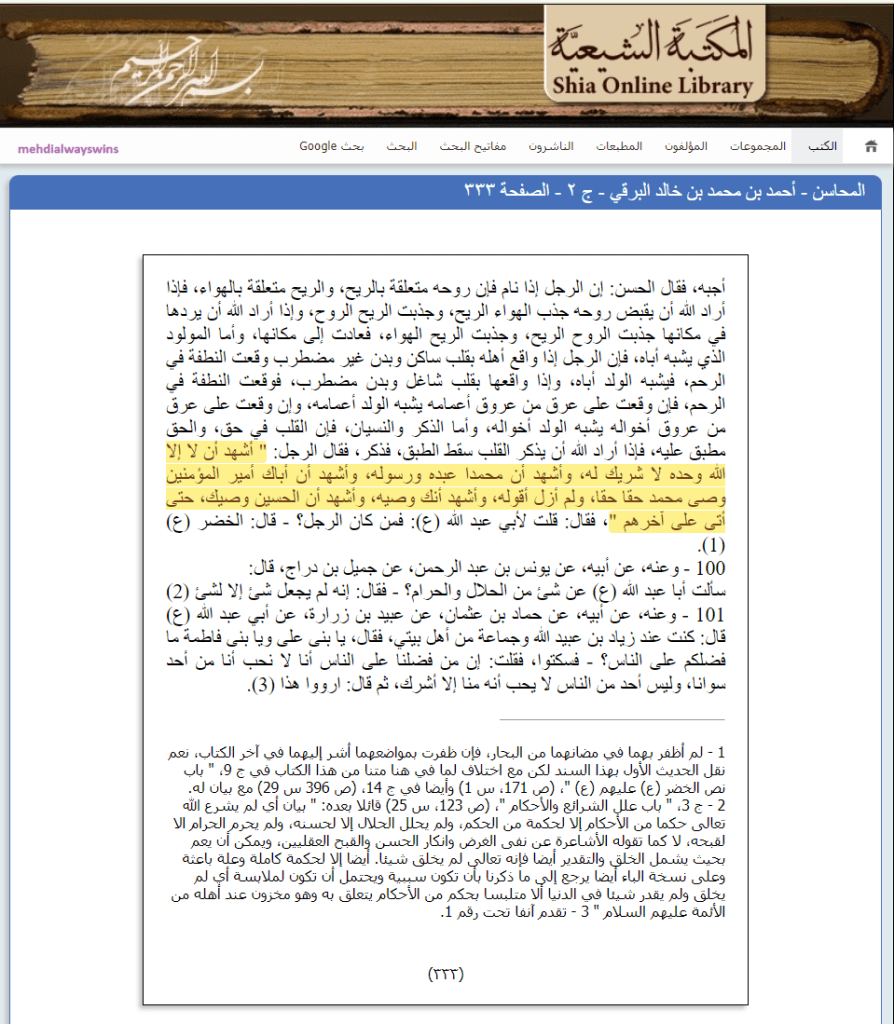
The First Issue: We know now that the narration that Al Kafi is taking from (that predates Al Kafi by about 50 years) does not contain any mention of the latter Twelver Imams, nothing about Muhammad al Baqir, nothing about Musa al Kadhim, and definitely nothing about ibn Hasan al Askari or Ghaybah. “Until the last of them came” means nothing in this context, as it could be used as proof by Ismailis or Zaydis as well.
The Second Issue: The Isnad in Al Kafi suggests that a “number of our people” narrated from Al Barqi, however none of these people are named, making this baseless and in fact even suggesting that the narration should be graded as Majhoul. Even if these people did exist and did narrate this specific tradition, it wouldn’t change the fact that these people tampered with Al Barqi’s work. (Mirʾāt al-ʿUqūl fī Sharḥ Akhbār Āl al-Rasūl (6/203), Majlisi grades this narration Sahih.)
The Third Issue: This perhaps suggests that foul play was involved by al Kulayni himself and that this alteration can be attributed to him. In fact if the narrators who narrated from Al Barqi did exist, it would be probable that Kulayni would name them, it is more probable that Kulayni was the one tampering himself. If this is the case, then it should suggest that Al Kafi is not a reliable hadith collection at all if the author is a forger.
We leave you to decide.
- Al-Maḥāsin p. 333 (http://shiaonlinelibrary.com/%D8%A7%D9%84%D9%83%D8%AA%D8%A8/1116_%D8%A7%D9%84%D9%85%D8%AD%D8%A7%D8%B3%D9%86-%D8%A3%D8%AD%D9%85%D8%AF-%D8%A8%D9%86-%D9%85%D8%AD%D9%85%D8%AF-%D8%A8%D9%86-%D8%AE%D8%A7%D9%84%D8%AF-%D8%A7%D9%84%D8%A8%D8%B1%D9%82%D9%8A-%D8%AC-%D9%A2/%D8%A7%D9%84%D8%B5%D9%81%D8%AD%D8%A9_38#top) ↩︎
 Mehdi's Library